
The Mythology of the Thorium Car, Thorium Plasma Batteries, and More!
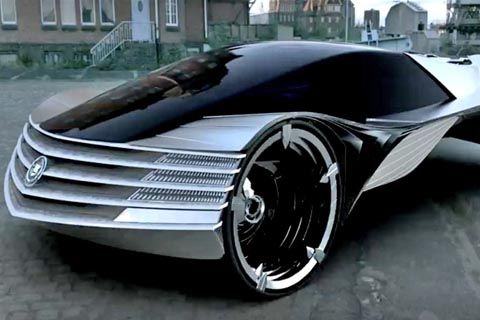
Every few years, a story makes the rounds on social media claiming that a thorium-powered car is just around the corner — or already exists and is being suppressed by the oil industry. The story is irresistible: 8 grams of thorium, about the weight of a few paperclips, could power a car for a million miles without refueling. The petroleum industry, terrified of this revolutionary technology, has bought it up and buried it.
It is a good story. It is not true.
Thorium is a remarkable element with a genuine and exciting future in energy production. This website exists to advocate for that future. But the thorium-powered car, and its companion fiction the “thorium plasma battery,” are myths — and allowing these myths to circulate unchallenged does real damage to the credible case for thorium energy. When people encounter thorium in serious policy discussions after first encountering it attached to conspiracy theories and impossible claims, the credibility of the entire technology suffers.
This post explains what the thorium car myth claims, why those claims are physically impossible, and why the real thorium story is compelling enough that it doesn’t need embellishment.
The Cadillac World Thorium Fuel Concept
The image at the top of this post is the Cadillac World Thorium Fuel Concept, designed by Loren Kulesus in 2009 to mark Cadillac’s centennial. It has 24 wheels. It was never built. It was never driven. It was a designer’s speculative exercise in imagining what a vehicle designed to last 100 years might look like — the thorium reference was conceptual flavor, not engineering specification. Kulesus himself described it as a “what-if” project.
The Cadillac WTF (yes, those are the intended initials) was not even the first nuclear-powered concept car from an American manufacturer. Ford’s 1957 Nucleon concept proposed a small uranium fission reactor in the trunk. It was never built either. Nuclear-powered concept cars have a long history of being exactly that — concepts, not vehicles.
The Laser Power Systems Claims
In 2011, a Connecticut company called Laser Power Systems began receiving press coverage for its claim that a thorium-powered car was imminent. The company’s CEO, Charles Stevens, described a system in which a high-intensity laser would heat a small block of thorium, generating heat that would produce steam to drive a turbine and generate electricity. Eight grams of thorium, he said, would power a car for a million miles. A prototype would be on the road within two years.
That was in 2011. No prototype appeared in 2013. None appeared in the years after that. Laser Power Systems has produced no working prototype, no peer-reviewed technical papers, no independent verification of any claimed performance figures, and no demonstration of the core technology it described. The story still circulates online, often presented as current news, stripped of its original publication date.
The claims attracted mainstream automotive coverage because thorium is a real element with real energy potential, and the numbers sound impressive. One gram of thorium does contain enormous potential energy — in the same sense that one gram of coal contains potential energy. The question is never how much energy a material contains in principle; it is whether a practical, safe, legal, and economically viable system exists to extract that energy at the scale and in the form required.
No such system exists for a car. Here is why.
Why a Thorium-Powered Car Is Not Feasible
The thorium car concept conflates two entirely different things: thorium as a source of nuclear energy and thorium as a source of thermal energy. These are not the same.
The Laser Power Systems concept does not propose nuclear fission. It proposes heating thorium with a laser until it gets hot, using that heat to boil water, using the steam to spin a turbine, and using the turbine to generate electricity. In this scheme, thorium is functioning as a heat-storage material — not as a nuclear fuel. A rock could serve the same function. The “million miles on 8 grams” figure is derived from thorium’s theoretical fission energy content, but the proposed system does not use fission. The system is, by the company’s own description, subcritical — no nuclear reaction occurs at all. The energy actually available from simply heating 8 grams of thorium with a laser and running it through a steam cycle is trivially small.
The reasons a genuinely nuclear thorium-powered car is not feasible are numerous and fundamental:
Shielding. Any system that uses nuclear fission — the only way to access thorium’s enormous energy potential — produces intense radiation. Nuclear power plants require meters of concrete and specialized shielding to protect people from that radiation. A car cannot carry that shielding. The 3-inch stainless steel container mentioned in some thorium car articles would provide essentially no protection against the gamma radiation produced by a fissioning reactor.
Scale. Nuclear reactors achieve criticality — the self-sustaining chain reaction that releases useful energy — only above a certain minimum size and fuel concentration. The smallest practical reactors are still substantial, fixed installations. The physics of criticality does not scale down to fit under a hood.
Regulation. Operating a nuclear reactor in a private vehicle on public roads would require regulatory frameworks that do not exist and could not be made to exist in any practical form. The Nuclear Regulatory Commission licenses fixed reactor installations after years of intensive review. Individual citizens driving personal nuclear reactors is not a regulatory challenge to be engineered around — it is categorically outside any conceivable framework.
Accidents. A crash involving a conventional vehicle is dangerous. A crash involving a vehicle containing an active nuclear fuel cycle would be a radiological emergency. The consequences of millions of such vehicles on public roads — where accidents are inevitable — are not manageable.
Waste. Nuclear fission produces fission products that require careful management and eventual disposal. A car cannot manage its own nuclear waste stream.
None of these are engineering refinements that clever design might overcome. They are fundamental physical and institutional realities.
The Thorium Plasma Battery
The “thorium plasma battery” is a related myth that has circulated online since at least the early 2000s. It claims that a battery using thorium plasma can store enormous quantities of energy — enough to power vehicles indefinitely — in a compact and safe package. Its inventors are invariably described as deceased. Its technical documentation invariably consists of links to other websites making the same claim, none of which contain actual technical specifications, peer-reviewed research, or reproducible experimental results.
This is the tell. A genuine technological breakthrough — even a controversial one — generates primary technical literature: patents, laboratory reports, peer-reviewed papers, conference presentations, and the work of independent researchers attempting replication. The thorium plasma battery has generated none of these. What it has generated is an interlocking web of citations among fringe websites, each treating the others as evidence of the technology’s existence.
The narrative is identical to the water-powered car, the 100-mpg carburetor, and dozens of other perpetual-motion-adjacent claims that have circulated for decades. The technology is revolutionary. Its inventors are dead or silenced. The oil companies suppressed it. The government classified it. The only evidence is the claims of people who have never demonstrated it publicly.
This is not how genuine technological suppression works, and it is not how genuine technology works. Real breakthroughs leave technical traces. The thorium plasma battery has left none, because it does not exist.
Why This Matters for Real Thorium Energy
The thorium liquid-fluoride reactor is a real technology with a documented history, genuine technical advantages, and serious ongoing development. It was demonstrated at Oak Ridge National Laboratory under Dr. Alvin Weinberg from the 1950s through the early 1970s. Its physics are well understood. Its potential to provide abundant, clean, low-waste energy from a fuel more common than tin is real, and this website exists to make that case as accurately and credibly as possible.
That case does not need embellishment. Every time a journalist, policy staffer, or curious member of the public encounters thorium attached to conspiracy theories or physically impossible claims, the credible technology suffers by association. The thorium car and plasma battery myths are not harmless fun — they are a recurring drag on the serious work of making the liquid-fluoride thorium reactor a reality.
The following video provides a thorough and technically sound examination of why the thorium car concept does not work. We include it because the technical explanation is good.
If you found this page because you read about a thorium-powered car or a thorium plasma battery and wanted to know if it was real — thank you for checking. The answer is no. But the real story of what thorium can actually do is worth understanding, and the rest of this website is dedicated to telling it.
A thorium engine is yet another atomic steam engine. It heats water with a laser. One claim is that a thorium (steam) engine the size of an air conditioner could power a small town. That amount of power in that space would be hotter than the interior of the sun.AKA fusion!
See this car that runs straight on water with out anything else, just water! http://m.youtube.com/watch?v=CrxfMz2eDME
see this
and this
and here
http://www.huffingtonpost.com/michael-graham-rich…
http://www.treehugger.com/cars/genepax-water-car-…
http://www.popularmechanics.com/cars/alternative-…
Did research on this a long time ago. Turns out it is *NOT* powered by water at all. This car uses what is known as an "Alkaline We Plate Aluminum Air Battery". I refer you to http://en.wikipedia.org/wiki/Aluminium%E2%80%93ai…
Thorium one does not power the car it’s powered by steam a thorium laser beam heats the water the turns the water to steam 8 grams of thorium would last 100 years they claim.
big petroleum and gas companies and other power companies doesn’t want that this happens and tries to stop this … once in Turkey a scientist was talking about the big reserve of thorium and borium and what they can make of it after her declaration some month later the plane with all the scientists working with her all mysteriously crashed … there is higher powerful assholes that they want this absolutely not !! That simple is it!!
This was an excellent analysis. But in terms of nuclear safety, you should read the following:
The Fukushima Daiichi Nuclear Power Station Disaster
Normal Accidents, by Perrow
Failure to Learn: The BP Texas City Refinery Disaster by Andrew Hopkins
Beyond Normal Accidents and High Reliability Organizations: The Need for an Alternative Approach to Safety in Complex Systems (paper)
Anything detailed about the Davis-Besse and Brown's ferry near misses.
If you do, you will realize that the nuclear accidents that have occurred were actually all close calls, and by blind luck, were not as bad as they could have been rather than opportunities for optimism regarding nuclear safety. As our plants age, their maintenance costs will increase, causing their operators to skimp on safety, resulting in more frequent accidents. The problem is trying to operate nuclear power plants with constant or increasing profit, rather than what's necessary (Production vs. Safety culture). A peer-reviewed paper I read calculated that if the world used nuclear power to generate most of its electricity, based on the current safety data, there would be a Chernobyl-scale nuclear accident somewhere in the world each month. This is not a record to be proud of.
Do a little more research and you will see that Thorium is much more controllable and safer than the isotopes currently being used.
you daft twat.
there is a big difference between uranium/cerium reactors in LFTR reactors. there are MANY safety precautions built into thorium reactors and because it’s liquid fluoride, if it drains out, no more reaction, no bang. no energy=no coolant to hold the liquid inside the container, it drains. educate yourself peaseant. LFTR is 100x safer than uranium reactors
Of Corse it will be down played can you imagine if all that was said about thorium were true the MULTIBILLIOM DOLLAR OIL CORPS. would be in heart attack mode. All they could see in the future is there profits going up in smoke, PUN intended. No more 40 billion dollar corp. wellfare checks out of tax payers pockets every year. These greedy S.O.B.'s would do or say anything to cloud the issue even paying some prominent scientist to denounce it .
If it was not for the US government we would have thorium power plants right now but Uranium is the best way to make bombs, so now we have Uranium based reactors. In the 1970s Hyman George Rickover (January 27, 1900 – July 8, 1986) was a United States Navy admiral who directed the original development of naval nuclear propulsion, Could have switched to Thorium reactors is subs but was in the POCKET of the Uranium Lobby!! In 'Oct 2, 2008 – Oct 2, 2008. S. 3680 (110th). A bill to amend the Atomic Energy Act of 1954 to provide for thorium fuel cycle nuclear power generation. "FAILED" why again the URANIUM lobby and General Electric KILLED IT>!!! Now the India and the Chinese are developing Thorium technology!!!
SO IF LFTR TECHNOLOGY IS SO GRATE WHY AREN'T THERE ANY IN THE US….
Thorium-fuelled Molten Salt Reactors (MSRs) offer a potentially safer, more efficient and sustainable form of nuclear power. Pioneered in the US at Oak Ridge National Laboratory (ORNL) in the 1960s and 1970s, MSRs benefit from novel safety and operational features such as passive temperature regulation, low operating pressure and high thermal to electrical conversion efficiency. Some MSR designs, such as the Liquid Fluoride Thorium Reactor (LFTR), provide continuous online fuel reprocessing, enabling very high levels of fuel burn-up. Although MSRs can be fuelled by any fissile material, the use of abundant thorium as fuel enables breeding in the thermal spectrum, and produces only tiny quantities of plutonium and other long-lived actinides.
Current international research and development efforts are led by China, where a $350 million MSR programme has recently been launched, with a 2MW test MSR scheduled for completion by around 2020. Smaller MSR research programmes are ongoing in France, Russia and the Czech Republic. The MSR programme at ORNL concluded that there were no insurmountable technical barriers to the development of MSRs. Current research and development priorities include integrated demonstration of online fuel reprocessing, verification of structural materials and development of closed cycle gas turbines for power conversion.
http://www.the-weinberg-foundation.org/wp-content…
Jim, My intelligence confirms that you have reported largely, the facts. Nothing technical is incorrect. I am told that the Chinese have also been deliberating looking out for and buying up supplies of various concentrates (containing viable grades of Thorium) and requiring further value adding refinement. They are stock-piling the Thorium-rich monazites and other residual parts of the tailings from these rare earths and minerals sands containing the viable grades of Thorium: whilst all other components of these tailings from the refining of such concentrates are being dumped using least-cost methods of disposal i.e. as washed sand & gravel & fill for various purposes. Sceptics must surely support a view that the Chinese Government is ill-informed and stupid OR concede that their own (sceptical) views about the future of Thorium as a long-term safe source of clean energy are at odds with the facts and based on their emotive disposition about our need to find a means of stopping the addition of further carbon to the atmosphere (by finding a source of producing synthetic coal and hydrocarbons from the existing CO2 in the atmosphere and extracting the excess carbon (they emphatically claim) has been, therefore still is AND will continue to cause climate change, unless it is extracted and made into in a stable form; then sequestered (i.e. interred permanently) in the earth's crust.
Same reasons we don't have decent public transportation systems, failing infrastructure, foolproof voting, and etc. But we have lots of ignorance translating to lack of imagination, as well as a wild surplus of religion, and etc.
The nuclear fuel that powers star ship Enterprise is thorium or some thing spelled a S . the solid state control of plasma is trilithium . fiction or real black board theories or all made up ? The fuel is for matter anti matter mixing and BOOM . NOW THE CAR , no claims made that said it really works only black board theory and designing and building the hardware to find out HOW ? The car seen like the Ford car are scale models . look at the photos and back grounds , shadows in background but no shadows on car . A model on a table with photograph in back ground .
It boggles the mind reading some of these comments especially those peppered with course language. Understanding and applying a little basic chemistry and thermodynamics will reveal the impossibility of the water powered vehicle and 100mpg carburetor as fiction. .
The concept of a Thorium Plasma battery is not new. It is a spinoff of 1990’s stories of the water powered car and of the 100 mpg carburetor.
Beyond Normal Accidents and High Reliability Organizations: The Need for an Alternative Approach to Safety in Complex Systems (paper)
I experimented on a hydrogen plant in my car and the best I could achieve was about 2litres a 100klm saving .Not worth the effort and risking water condensing into your engine and exhaust pipe . As a plumber lacking knowledge on the subject it makes me wonder why someone working in this field could not do better . I think the best and cheapest way to go is compressed air cars no expensive batteries only air . Skoda are releasing one soon and there is an engine on the Webb . engineair's ultra efficiency rotary compressed air motor . Which has been out for the past 10 years yet no manufacturers are showing any interest . Regards Brian
I rode in a car powered by compressed air in Eastern Europe a few years ago. They had compressers @ filling stations & have been doing it for some time now.
People remember one thing, regardless how viable any new technology or ideas may be, until we get rid of the influence of the oil corporations, nothing new will ever be developed. We have to get the oil lobby groups out of our countries capitals, we have to get politicians who will not cave in to the oil companies. We need legislation that will allow the mass production of these new technologies, once they do come forward. There are going to be technologies out there, viable ones, but before we can move forward with them, we have to remove these roadblocks and assholes like Stephen harper who is so deep into the pockets of the oil companies, no other technologies will ever survive regardless how viable it may be. But regardless what any of you may think of these new technologies and how negative nay sayers may be, some of these technologies are viable, they just need governmental support for further development. But as it stands right now, that is never going to happen.
Do a little more research and you will see that Thorium is much more controllable and safer than the isotopes currently being used.
Thanks