
Interview with SINAP MSR Program Lead Xu Hongjie
Guangming Daily: After building the Shanghai Light Source, he pioneered a new generation of nuclear energy for 16 years
At the 11th “Serve the Country Forum” held by the Shanghai Branch of the Chinese Academy of Sciences recently, Researcher Xu Hongjie, Director of the Academic Committee of the Shanghai Institute of Applied Physics of the Chinese Academy of Sciences and Head of the Thorium-based Molten Salt Reactor Nuclear Energy System Technology Overall Group, revealed that due to its excellent performance, the global research and development enthusiasm for molten salt reactors continues to rise, and “China is at the forefront of the world in this field.”
South China Morning Post: China has world’s first operational thorium nuclear reactor thanks to ‘strategic stamina’
Interesting Engineering: China builds world’s first working thorium reactor using declassified US documents
China has world’s first thorium reactor in landmark for clean nuclear energy
Project chief scientist Xu Hongjie confirmed that the reactor had reached critical milestones, including full-power operation in June 2024 and successful in-operation fuel reloading four months later. “We now lead the global frontier,” Xu said at the meeting. “Rabbits sometimes make mistakes or grow lazy. That’s when the tortoise seizes its chance.”
Have the Chinese built the world’s first thorium molten-salt reactor? In one sense, yes, and in another sense, no.
In the earliest plans for the Molten-Salt Reactor Experiment, they intended to add a small amount of thorium to the fuel salt, on the order of one mole percent. Their fuel salt consisted of lithium fluoride and beryllium fluoride salt (“FLiBe”) with some added zirconium tetrafluoride to catch any stray oxygen and the actual fissile fuel: uranium tetrafluoride. But they never actually added thorium tetrafluoride, and there was a pretty good reason why they didn’t.
The uranium they started the reactor on was enriched to about 33%, and after a few years of operation on that enriched uranium, they removed it from the salt by fluorination. Then they pursued their main objective of adding uranium-233 (tetrafluoride) to the salt to show that a molten salt reactor could run on uranium-233 fuel. No one had ever run a reactor on uranium-233 fuel before. Other reactors had made some U-233, but there were no reactors where it was the only fuel, or even the dominant fuel. The MSRE was the very first one, liquid-fueled or otherwise. We go into the reasoning behind that a little more in the recent video we made about the role of U-232 in the development of thorium reactors.
During the period which the MSRE ran on enriched uranium, they had produced a little plutonium, as common uranium-238 absorbed a neutron and formed fissile plutonium. That plutonium wasn’t removed from the fuel salt, and was still present when they added uranium-233 tetrafluoride. It wasn’t the dominant fissile in the reactor, but there was a small amount of it, and it contributed to power generation during U-233 operation.
The uranium-233 that was loaded into the MSRE had been created in another reactor, from thorium. That’s the only way to get uranium-233. But it wasn’t created IN the MSRE from thorium that was IN the MSRE. So in one sense you could say that the MSRE was the first MSR to run on a thorium-derived fuel, but the purist would say that the MSRE ran on U-233 from thorium.
What does this have to do with the Chinese reactor? Apparently the Chinese have started their MSR on enriched uranium, just like the MSRE was started, and just like those early MSRE plans, they actually did include some thorium in the salt. Thus it made some uranium-233. Was it enough to “refuel” it? Almost certainly not. But they’re claiming an accomplishment and it might be theirs to claim: they’ve been the first ones to run an MSR with thorium in the salt.
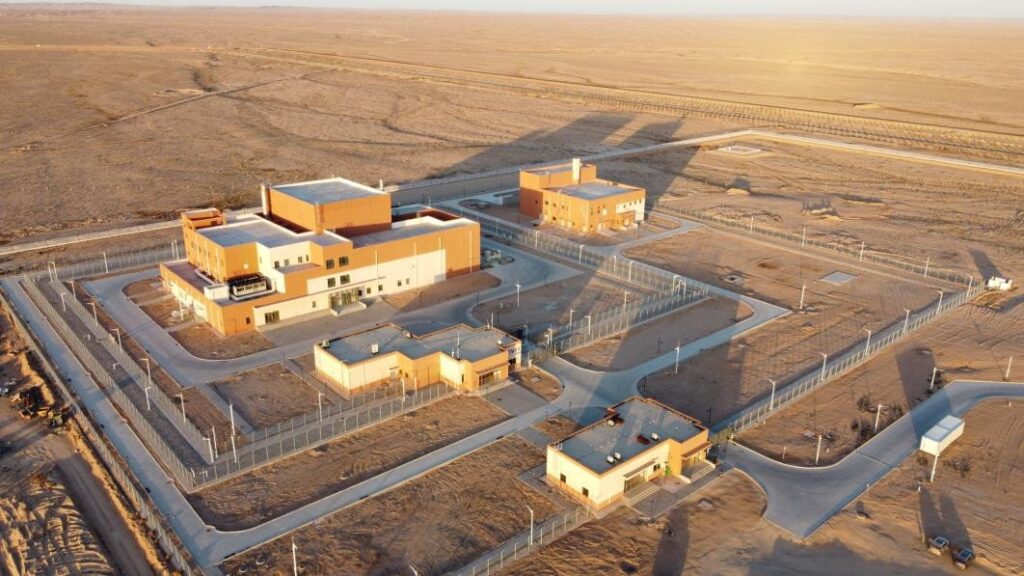
From everything I’ve seen and read, their reactor design is nearly identical to the MSRE, in almost every respect. Even the building in which it is housed appears to have the same floorplan. So they are at essentially the same technological stage that the United States was in the 1960s. I am sure they have grander plans beyond this, but it does not appear that they have tackled the follow-on challenges of connecting the reactor to a power conversion system that will convert the thermal power generated by the reactor into shaft power and then into electrical power. That accomplishment would represent a huge step forward for any molten-salt reactor. But don’t get me wrong, what they’ve accomplished is still a big deal, and the US and other Western countries should try much harder to get molten-salt reactors built and operating.