
IAEA webinar about nuclear tech for maritime
I really love to talk and think about nuclear power in a maritime environment. But strangely enough, until recently, not many other people seemed to feel the way that I do. A lot of people seem to think that it is strange to talk about nuclear power being used to move a big ship across the ocean. I try to remind them that moving a ship was one of the very first things that we ever tried to do with a nuclear reactor. Back in 1955, the USS Nautilus had a nuclear reactor installed on it that could allow to go all over the world and under the polar ice-caps, all without burning anything. We take it for granted now that submarines would use nuclear power (I mean, of course! right?) but that for some reason the notion of using nuclear power for tens of thousands of other ships represents something strange and foreign.
Well, I’ve been thinking about it since at least 2005, and talking about it publicly since about 2019. Our company, Flibe Energy, counts those in the maritime shipping industry among its investors. I was very happy to be invited by the International Atomic Energy Agency (IAEA) to be a part of a webinar around nuclear technology intended for use in the maritime environment, which took place on May 14th, and was watched by hundreds of attendees across the world.
Joint IAEA-GIF Webinar on Advanced Nuclear Technologies for Maritime Applications
Dr. Patricia Paviet introduced me and our work at Flibe Energy, and I had an opportunity to talk for about fifteen minutes during the webinar. I admitted that our approach to maritime nuclear power is not nearly so far along towards actual demonstration as the RITM concept that Tatiana talked about. I noted that nuclear power had originally been developed as an engine for mobile submarines (as well as the NS Savannah) rather than as a static installation for terrestrial power generation. The molten-salt reactor was also originally developed as a mobile reactor as well, but for powering a nuclear aircraft, a long-range intercontinental bomber. I noted the advantages of the molten-salt reactor, such as its ability to operate at high temperatures while yet at low pressures, as well as its ability to be refueled during operation. I had wondered if MSRs had been seriously considered for maritime propulsion, but I had not been able to find much evidence in the literature. But it certainly seemed like they had the qualities that such a maritime reactor needed, most notably, the ability to go up and down in load quickly.
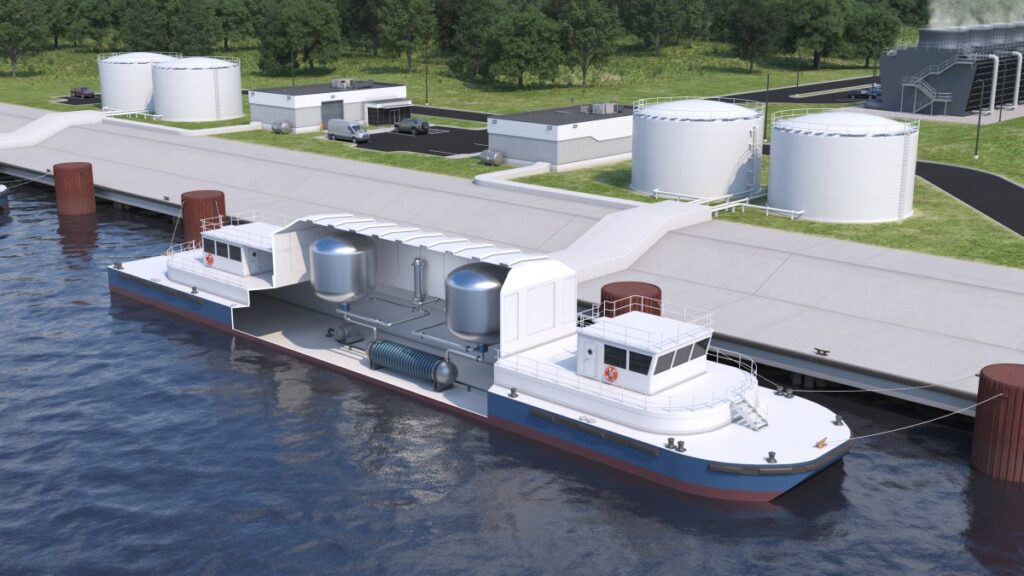
I said that my heart had always been drawn to the idea of the reactor as an “engine” and that I felt that the MSR had superior attributes for realizing that goal. I then turned my attention to the geography of the United States, noting that it had a vast inland waterway network, and that we found most of our powerplants along these inland waterways. Many of these that are coal-powered are in the process of being shut down and decommissioned. Could these sites be repowered with a lower-carbon alternative? Mobile natural-gas turbines might be one way, but they would depend upon terrestrial natural gas pipelines. But what about a barge-mounted MSR that could move along inland waterways? This option seems very interesting and compelling to me. These reactor barges could be built in shipyards in large numbers. They could arrive at a decommissioned coal plant sites and repower them using nuclear power.
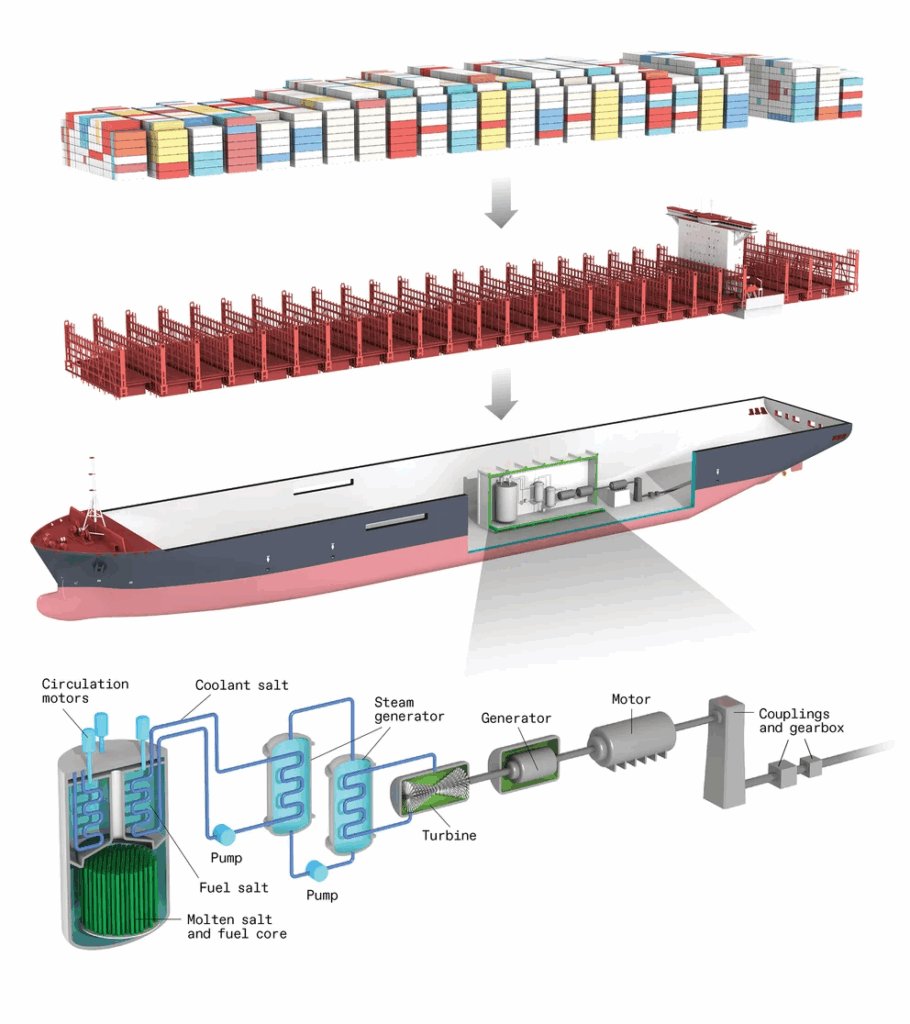
In terms of nuclear propulsion of commercial vessels on the open ocean, I challenged the idea that this would be accomplished with a reactor (MSR or otherwise) that would be built into the hull of the ship as one might integrate a large diesel engine. One of my objections was the cost of the nuclear “engine” versus the cost of the ship itself. It might very well be that the nuclear reactor is much, much more expensive than the entire ship. What happens when the nuclear-powered ship goes into port? Does it power-down? Does it submit to local inspections? Does it connect to shore-based power, either to receive power or to give it? It seems clear that a nuclear-powered ship in port is not making its owners much money. I declined to share the concept that we believe might address all these concerns in this venue, but I wanted to raise the questions to the audience.
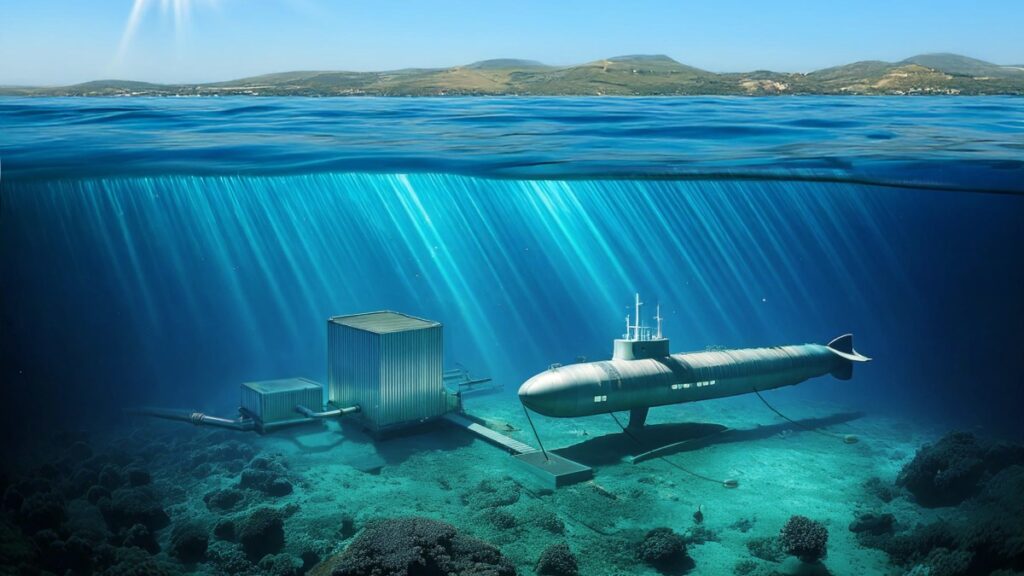
Finally, I concluded on a concept that I have been nursing in my mind for about twenty years, and that is the idea of a submarine nuclear power installation that would be meant to power terrestrial power loads via an underwater connection. I like the idea of a submersible installation because it protects you largely against adverse weather effects on the surface. I also like the fact that the installation would be reversible. If political relations between the nation that operates the underwater powerplants and the host nation “goes sideways”, they could un-plug and bring the submarine reactor home. The production of desalinated water would be another attractive and appealing product from such a facility. I had to wrap up but I hope we will have future opportunities to talk about nuclear power’s application in maritime.